
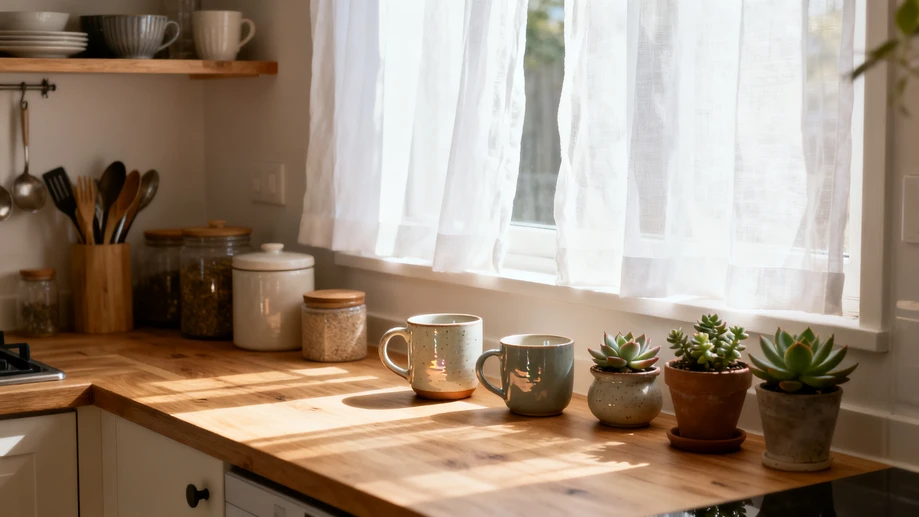
You Don’t Need Empty Countertops To Have A Cozy Beautiful Home
This viral interior hack redefines what a functional lived-in home can look like, and it is taking over lifestyle feeds across major social platforms.
Anyone scrolling through social media lifestyle sections lately will notice a sharp shift from the overly staged, all-white empty countertop aesthetics that dominated feeds for nearly a decade. Thousands of users are sharing clips of their kitchen counters, work desks, and bathroom vanities that are no longer kept completely bare for photos, and the overwhelming response from viewers is shockingly positive. The trend does not involve random messy piles of unwashed dishes or discarded trash, it instead frames every item kept out on open surfaces as a functional, intentional part of the home design. Many users who have tested this setup report saving 10 to 20 minutes every single day that they previously wasted rummaging through deep cabinet shelves for mugs, lip balms, or notebook pens they use multiple times every 24 hours.
The rise of this untraditional design trend comes as a natural reaction to the extreme minimalism that pushed millions of people to rearrange their homes to look like untouched showroom displays. For years, content creators shared tutorials on how to tuck every last daily use item behind closed cabinet doors, even if that meant stacking daily used cooking pots on top shelves that required a step stool to reach. A huge number of people realized they were spending far more time cleaning and rearranging their home for photos than they actually spent enjoying living inside it. Most who tried the full empty countertop aesthetic quickly found that cooking a simple weeknight meal would leave the whole space looking messy for hours, and they would have to do a full 30 minute deep clean just to get the space back to the picture perfect state they saw online.
This new popular approach to home design does not throw all organization rules out the window, though. Most participants stick to a simple core guideline that prevents spaces from devolving into cluttered chaos: every single item left out on open surfaces must be used at least once every two days. There is no spot for random dusty decorative figurines that never get touched, no unused fancy dishware kept out only to be seen by guests, no random pieces of junk left out by accident. Each item placed on the counter or open shelf serves an immediate, regular purpose, which cuts down on unnecessary movement around the home and makes daily routines flow far more smoothly than they ever did when everything was locked away out of sight.
Users have come up with dozens of small, clever tweaks to make this functional open storage look far more visually appealing than random piles of supplies. Many line up their most used ceramic mugs in a neat row on a low open shelf under the kitchen window, grouping similar muted tones together to create a soft, warm visual effect that changes slightly every time they grab a mug for morning coffee. Others prop half-read books on the edge of their coffee table instead of tucking them away on a high bookshelf, so they can pick up reading right where they left off the second they sit down after work. Small potted succulents and trailing ivy plants get tucked into empty gaps between jars and containers, adding little pops of soft green that feel far more natural than generic mass produced wall art hung to fill blank space.
What makes this trend so wildly popular is how accessible it is for renters and people on tight budgets, with no requirement to buy expensive new furniture or full sets of matching decor. It relies entirely on the items people already own and use every single day, turning ordinary routine objects that were once hidden away into the main decorative features of the home. Visitors walking into these spaces immediately pick up on the warm, relaxed vibe that never comes from a perfectly staged empty home, as they can instantly see that a real person lives there and uses the space regularly. Over time, more and more people are letting go of the pressure to maintain a flawless home that looks like it belongs on a magazine cover, and choosing instead to build spaces that are optimized for their own comfort, not for the views of strangers scrolling online.