
Little Known Headphone Hacks That Make Everyday Life Way Smoother
These simple no-cost tricks help people get far more value out of their over-ear headphone sets for all daily scenarios.
Over-ear headphones have become a common carry item for people navigating crowded cities and quiet home spaces alike, but most users only tap into a fraction of their practical potential. Many stick to full noise cancellation mode for every scenario, running the risk of missing important public alerts like crosswalk warnings, incoming bus announcements, or a neighbor’s friendly call to hold the building door open. A simple adjustment to tiered background transparency settings, rather than full on or full off, lets users filter out sharp traffic hum and distant construction noise while still retaining low volume ambient sounds that keep them aware of their surroundings. This tiny tweak cuts down the number of times people have to yank off their headphones mid-commute drastically, and eliminates most of the small safety risks that come with being fully disconnected from the external world while walking or waiting for public transit.
One of the most widely cited complaints about over-ear headphones is the unwanted hair indent left on the top of the head after hours of wear, but this issue is almost entirely avoidable with a small change in how users take them off temporarily. Instead of lifting the whole set straight off the head when a food delivery arrives, a family member calls for a quick chat, or a barista at the café calls out an order, tilt the earcups upward and slide the headband back to rest around the nape of the neck. The soft cushion of the earcups will sit comfortably against the collarbone with no extra pressure, and no sharp edge of the headband will press against the top of the hair. People who work from home for 8 to 10 hours a day report that this habit removes the need to re-style their hair before stepping out for last minute errands after work, and saves them from the awkward moment of realizing two distinct dents run across their scalp right before an unexpected video call.
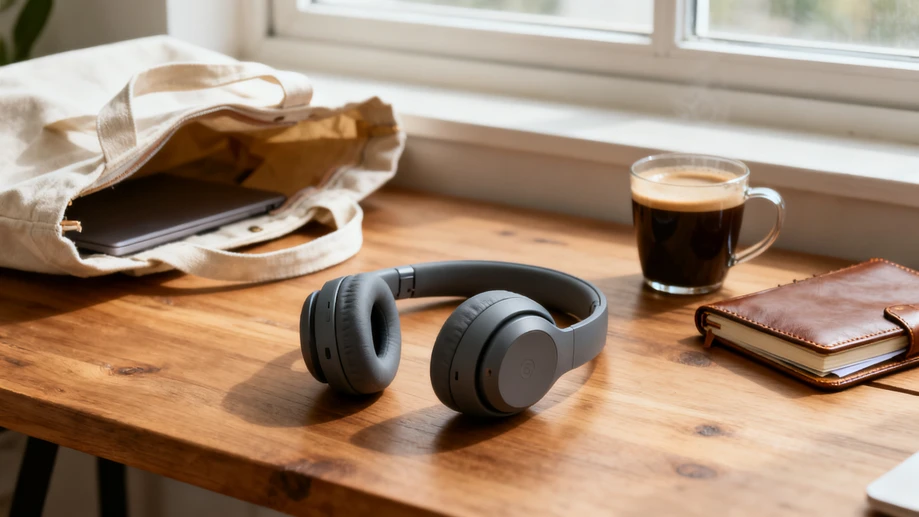
Most over-ear headphone owners waste money on specialized thick storage cases, but there is a zero-cost storage trick that cuts down the carried space by half and protects the device far better against accidental scratches. Simply fold the two earcups inward toward each other so the soft padded inner layer faces outward, then tuck the whole set into the side pocket of a regular tote bag or backpack. The cushioning of the earcups forms a full soft barrier that blocks sharp edges of keys, loose pens, or even small food crumbs from touching the hard shell of the device, and the folded slimmed down shape fits easily into gaps that would never fit the whole unfolded headphone set. For people who pack light for weekend trips, this storage method lets them slip the headphone set into the side pocket of a carry-on suitcase, no extra bulky case taking up valuable space for clothing or toiletries required.
There is a long outdated myth that over-ear headphone batteries need to be drained completely before recharging to extend their lifespan, and this misconception leads to countless awkward moments of sudden device shutdown in the middle of a long bus ride or a quiet study session. Modern lithium batteries built into all current over-ear headphone sets support full casual top-up usage, so users can plug their device into a shared portable charger for 10 minutes while grabbing a drink at a convenience store even if the remaining power sits at 30 percent. This short quick charge adds 3 to 4 extra hours of continuous playback time, which covers the length of most cross-city commutes or full afternoons of reading at a local library. Users who adopt this small top-up habit rarely run into unexpected low battery alerts, and never have to fumble for a tangled wired backup when they settle into a seat ready to listen to their favorite audio content.
None of these small adjustments require special tech knowledge, expensive add-on accessories, or extra hours of setup time. Most of them only take a few days to turn into automatic muscle memory, and make the experience of using over-ear headphones far less cumbersome than most people expect. Many long time over-ear headphone users used to leave their devices at home for short trips out of fear of the bulk and extra hassle, but after testing these small hacks, they find the all day wearing comfort far exceeds that of smaller in-ear alternatives, making the over-ear set a regular essential item that goes everywhere with them.