
Budget No-Demo Bedroom Tweaks That Make Tight Spaces Feel Twice As Big
Viral zero-renovation bedroom design tips are taking over lifestyle feeds, delivering massive space gains for small bedrooms without big spending or construction work.
Across all major lifestyle sharing platforms, thousands of users have been posting side-by-side before and after shots of their under 180 square foot bedrooms, proving that full-scale renovation is never a must to upgrade a cramped sleeping space. Most of these transformations cost less than 100 dollars total, and none require drilling large holes in walls or tearing out existing fixtures, which makes them perfect for renters and first time homeowners who do not have the budget or permission for big structural changes. The trend blew up after multiple creators shared their own 30 minute adjustments that left their bedrooms feeling far more open and functional, drawing millions of views from people who had spent years assuming their tiny rooms had no room for improvement.
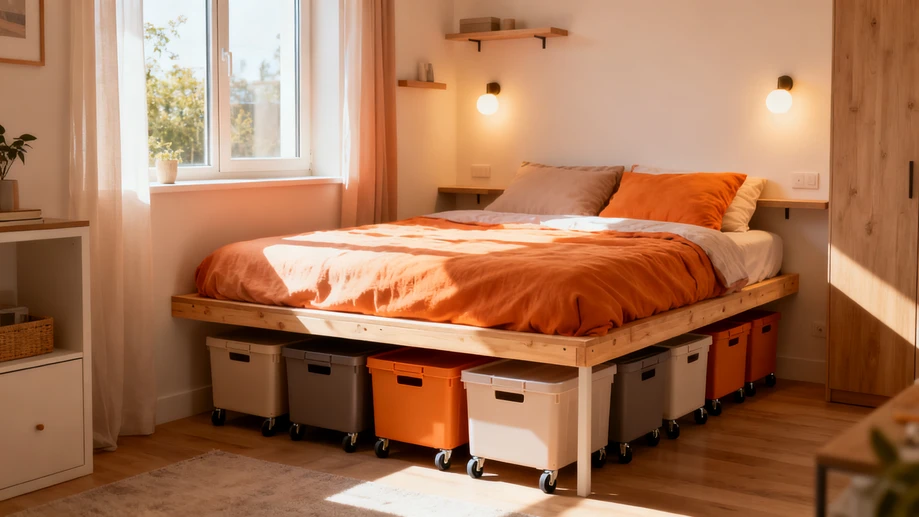
The most widely shared hack in this trend calls for ditching the common setup that puts the bed right next to the window, which wastes the largest source of natural light in the entire room. Instead, the bed frame is pushed all the way to the dimmest corner opposite the window, and raised 12 to 15 inches off the ground with low cost solid risers. The empty space under the bed can fit four to six slim rolling storage bins, perfect for stashing out of season bedding, rarely worn footwear, and extra hobby supplies that would otherwise take up valuable closet or floor space. With the bed no longer blocking the window, the entire section by the glass becomes fully usable, leaving enough room for a small workout mat, a foldable work desk, or a potted tall leafy plant that adds a natural focal point without cluttering the area.
Another easy adjustment cuts out bulky floor standing nightstands that usually take up 2 to 3 square feet of precious floor space on both sides of the bed. A narrow floating shelf mounted 12 inches above the mattress height works perfectly to hold a phone, a water glass and a small stack of reading books, and leaves the floor under it completely empty for feet to move around without bumping into hard edges. For people who cannot drill into walls for temporary stays, a fabric hanging organizer slung over the side of the bed frame works just as well, with multiple pockets to store chargers, sleep masks and lip balms within arm reach. Wall mounted hook strips installed along empty stretches of wall near the door eliminate the need for standing coat racks too, holding bags, hats and light outerwear without occupying any extra footprint.
Lighting adjustments play a surprisingly huge role in making a small space feel far larger, and most people get this part completely wrong by relying only on a single harsh overhead ceiling light. The bright single source casts sharp dark shadows in every corner of the room, which breaks up the visual flow and makes separate parts of the space feel cramped and disconnected. Swapping the single central light for two soft wall mounted sconces on either side of the bed, plus a small low wattage table lamp on the far side of the room, spreads warm even light across every corner with no harsh dark patches. Many users add thin strands of warm white string lights along the top edge of the wall near the ceiling too, which draw the eye upward and make the ceiling feel noticeably higher than it actually is.
The final tiny trick that ties the whole transformation together is unifying the color palette of all soft furnishings across the room. Too many high contrast, bright scattered colors break up the visual field and make the space feel crowded even when there is almost no clutter left. Choosing bed linens, area rugs and window curtains from the same general color family, in slightly different shades and textures, creates a smooth uninterrupted visual line that lets eyes travel from one side of the room to the other without hitting jarring breaks. Countless commenters on these transformation posts note that they followed the exact same set of steps, and their visiting friends often ask if they somehow managed to knock down a wall to expand the total square footage, even when no structural changes took place at all.