
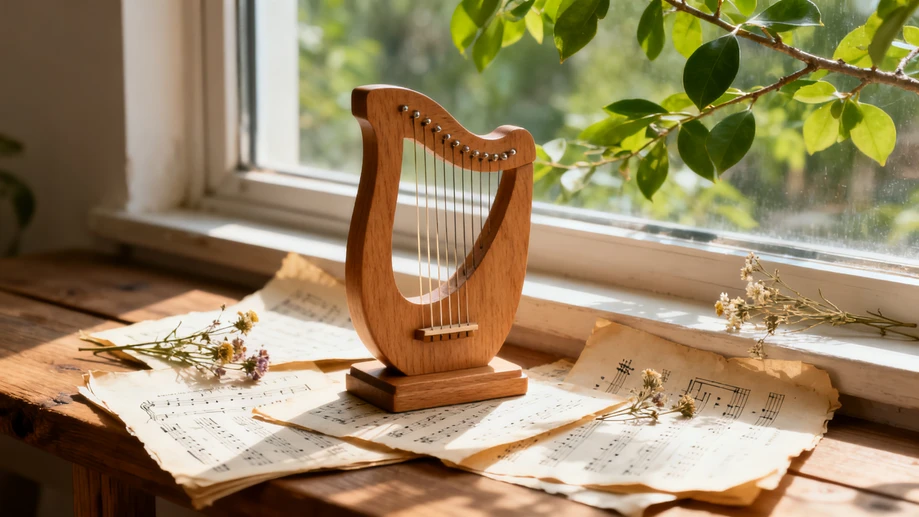
The Unassuming Harp Is Far More Versatile Than You Might Think
Most people only associate harps with ancient religious art or stuffy classical recitals, but the instrument has far more hidden sides to explore.
Most popular media representations frame the harp as a distant, elite instrument reserved for formal concert stages or whimsical fantasy worlds, where it is only plucked by angelic figures in passing background scenes. This narrow view has led many casual observers to assume the harp is impossibly difficult to learn, prohibitively expensive to own, and rarely used outside of small niche classical music circles. What very few people realize is that this stringed instrument has spent thousands of years woven into the fabric of everyday life for communities all across the globe, rather than being locked away in high-end performance venues out of reach of regular music lovers.
Archaeological records and surviving folk art show that early harp variants appeared independently in dozens of different regions, stretching from the Celtic highlands of Western Europe all the way to the remote rural valleys of the Andes Mountains and the savannah communities of Central Africa. None of these early traditional harps resembled the massive 47-string concert harp most people recognize today. Many were small, lightweight, strung with plant fiber or animal gut, and designed to be carried between village gatherings, harvest festivals, and family ceremonial events to accompany group singing and impromptu folk dance sessions. Local folk players would pass down performance techniques through family lines for generations, turning simple, familiar folk melodies into layered, warm pieces that felt like a direct extension of the local natural environment.
Over the past 10 years, the popularity of smaller, affordable lever harps has exploded among casual music communities looking for low-pressure creative outlets. These compact models weigh less than 10 kilograms, fit easily in the backseat of a standard car, and require no complicated tuning maintenance to keep playing well. They show up everywhere from laid-back weekend camping trips and cozy independent coffee house sets to small local street performance spots, where players pair bright harp tones with modern indie pop covers, soft folk original tracks, and even gentle electronic ambient tracks that draw standing crowds of curious passersby. Many new players share short clips of their casual harp sessions on social media, showing that no formal decades-long training is required to pull off a beautiful, recognizable melody after just a few weeks of casual practice.
The harp’s unexpected resurgence as a casual hobby instrument ties directly to the unique properties of its sound production. Unlike many fretted or bowed string instruments that produce harsh, discordant notes when played by new learners, every string on a standard harp is tuned to a note that fits within a carefully selected diatonic scale. Even a total beginner who runs their fingers lightly across the full set of strings will produce a flowing, harmonious cascade of sound that feels naturally calming, no messy, jarring off-notes involved. Many adult new learners report that 10 minutes of casual plucking after a long workday clears lingering stress far more effectively than passive scrolling through social media feeds, as the focused, low-stakes physical interaction with the instrument pulls full attention away from looping work worries.
Sound researchers have also measured that the consistent harmonic overtones produced by vibrating harp strings line up almost perfectly with the alpha brain wave frequencies that trigger deep relaxation in human listeners. This discovery has led to the harp being adopted as a core tool in modern sound therapy programs, used to lower anxiety levels in palliative care spaces, soothe overstimulated young children in early education centers, and even help new parents lull fussy newborns into a longer, more peaceful sleep. There are no signs of this widespread mainstream adoption slowing down, as more and more people discover that the seemingly aloof, fancy harp is actually one of the most accessible, warm, and versatile instruments available to regular hobby players today.