
Wait The 70s Retro Maximalist Small Apartment Trend Is Way Less Chaotic Than You Think
The viral low-lift home decor trend taking over lifestyle feeds offers maximum warmth without the clutter people usually associate with maximalist design
Scroll through any popular lifestyle sharing platform these days, and you will run into dozens of before-and-after clips of tiny studio apartments transformed with the 70s retro maximalist aesthetic, a trend that seemed to pop up out of nowhere in the last three months and rack up hundreds of millions of views across different accounts. For years, casual home decor lovers have been told maximalism requires filling every empty surface with trinkets, hanging dozens of art prints across every wall, and stacking furniture until there is barely space to walk across the room. Most people wrote off the entire style as an unworkable mess for spaces under 600 square feet, no matter how much they loved the warm, lived-in vibe it promised.
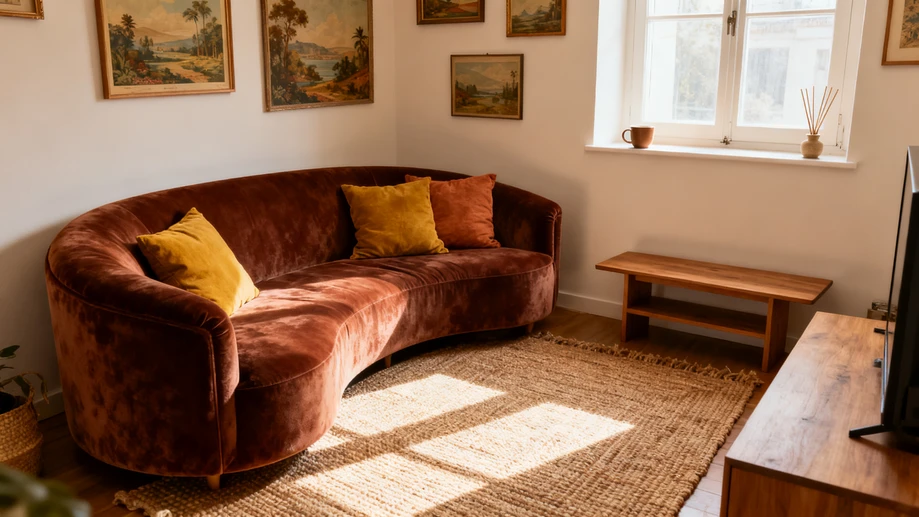
The new iteration of this 70s focused trend tosses all those old unwritten rules out the window, and its core design logic is far simpler than most people expect. Instead of overloading every visible surface with small decorative items, creators leading the trend lean into large, textural single pieces that cover big areas of the room without adding visual noise. A curved low-profile velvet sofa in burnt sienna acts as the centerpiece of the entire living space, paired with a single hand woven chunky knit rug that stretches across the whole floor area in front of the couch. The rest of the large furniture, from the low wooden coffee table to the narrow bookshelf in the corner, keeps simple clean lines in warm natural wood tones that do not compete for attention with the main sofa.
One of the most surprising rules driving this viral version of the style is that all flat surfaces must keep at least 70 percent of their area completely empty, a choice that prevents the cluttered feeling most people associate with traditional maximalism. No random figurines, no stacks of useless decorative candles that no one ever lights, no rows of tiny framed photos lined up along every shelf. The few items placed out on open surfaces are all daily use objects people reach for every single day, from hand thrown ceramic mugs to a stone essential oil diffuser and a small stack of read books, so they feel naturally integrated into the space rather than staged for social media photos. The small pops of warm, saturated color that define the 70s vibe come entirely from soft furnishings, from a handful of throw pillows in mustard yellow, burnt orange and olive green to heavy linen curtains in muted terracotta.
Most people who have shared their own full apartment transformations for this trend report spending less than 300 dollars on the entire refresh, which is another big reason for its explosive popularity. Almost none of the large core pieces are bought new, with most owners picking up second hand wooden furniture from local community swap markets and adding a quick coat of natural wood oil to bring the old finish back to life. Even the wall decor skips overpriced mass produced art prints, with plenty of people cutting up thrifted vintage landscape calendars, stretching old knit sweaters over cheap blank frames, or taping up old vinyl record sleeves to create low cost personal displays that no one else in their neighborhood will have an exact copy of.
The growing appeal of this style ties back to a widespread frustration with the cold, perfectly polished minimalism that dominated home decor content for more than a decade. A completely white empty apartment might look great in edited photos, but it feels cold and unwelcoming after a long work day, and people often feel like they cannot set down a half empty mug or toss a casual blanket over the couch without ruining the carefully curated look. This new relaxed take on 70s maximalism has no arbitrary rules about keeping everything perfectly spotless or arranged a specific way, it feels naturally worn in and welcoming the second someone steps through the door. Friends who come over for impromptu movie nights can sink right into the soft couch, set their drinks down on the coffee table without worrying about leaving marks, and no one has to feel like they are disrupting a fancy display put together for online likes.