
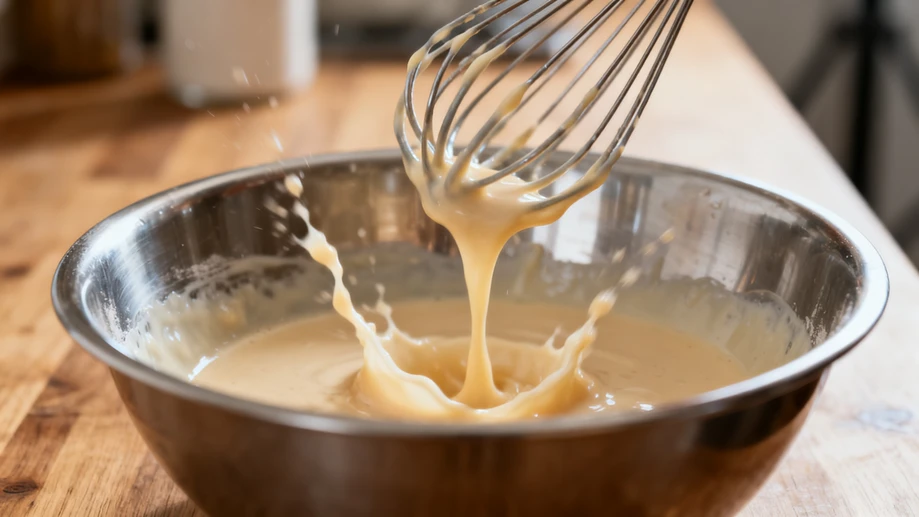
The Whisk Whisperer's Guide to Avoiding Kitchen Disasters
Stop turning your cakes into bricks and your sauces into lumps with this one simple tool masterclass.
Let's be honest, we've all been there. You're elbow-deep in a promising cake batter or a velvety béchamel sauce, heart full of hope, only to witness the tragic transformation into something resembling concrete or, worse, lumpy wallpaper paste. Often, the culprit isn't the recipe or your skill, but a humble tool misused: the whisk. It seems so straightforward – just beat things together, right? Yet, mastering the whisk is the stealthy secret weapon separating kitchen triumphs from tearful cleanups.
Think about its primary job: incorporating air and creating structure. Unlike a spoon that merely pushes ingredients around, or a fork that might tear, a whisk is engineered with its looping wires to trap air. This is absolute magic for egg whites, transforming them from slippery goo into towering, stiff peaks that form the backbone of soufflés and meringues. But it's equally vital for making light, tender pancakes, fluffier scrambled eggs, or ensuring your gravy is silky smooth without a single lump. The difference lies not just in *having* a whisk, but in *understanding* which whisk and how to wield it.
Now, not all whisks are created equal. The most common is the balloon whisk – a rotund shape perfect for general mixing, whipping cream, and folding air into batters in wide bowls. Then there's the slender French whisk, designed for reaching into the corners of pots and pans, essential for smooth sauces and roux without scorching. For serious emulsification jobs like mayonnaise or vinaigrettes, the small, tightly wound coils of a sauce whisk are your best bet. Beyond shape, the material counts too. Sturdy stainless steel whisks are durable and efficient, while silicone-coated ones are gentle on non-stick pans but might not whip air as effectively. Choosing the right soldier for the battle is half the win.
Having the right tool is crucial, but technique is the real game-changer. Using a whisk isn't about frantic, splashy arm-flailing. It’s about controlled, rhythmic movement. For maximum aeration, especially with egg whites or cream, hold the whisk at a slight angle and use broad, fast, circular motions that lift the mixture up and over itself. Imagine drawing continuous, energetic "O's" in the bowl. Your bicep will thank you for the workout, but the results are worth it. When tackling sauces, a gentler figure-eight motion helps prevent splashing while ensuring even heat distribution and flawless integration. And please, match the whisk size to your bowl! Trying to whip a tiny amount in a giant bowl is a guaranteed path to frustration and mediocre results.
But what if I told you your whisk is capable of far more than just beating eggs? This versatile tool is a secret multitasker. Use it to gently break up ground meat while browning, ensuring smaller crumbles instead of large, unappetizing chunks. A quick whisk can revitalize separated salad dressings in seconds. Stuck mashing avocados for guacamole? A balloon whisk makes quick work of it, achieving that perfect creamy-yet-chunky texture effortlessly. Even tenderizing thin cuts of meat becomes a breeze with a few strategic taps from the wires. It’s the ultimate kitchen multitool hiding in plain sight.
So, the next time you face a recipe demanding "vigorous whisking," don't just grab the nearest implement and hope for the best. Respect the whisk. Choose the right type for the job, wield it with purpose and a touch of finesse, and unleash its full potential. You'll discover the path from potential disaster to consistent, glorious results isn't paved with expensive gadgets, but with mastering the fundamentals. Put down that fork for scrambling eggs. Embrace the whisk, listen to what it whispers about technique, and watch as your kitchen confidence – and your culinary creations – soar to impressive new heights. Say goodbye to rubbery cakes and hello to culinary triumphs, one perfect whip at a time.