
That Old Toy Box Might Be Smarter Than You Think
Rediscovering the magic of simple playthings in a digital world
Walk into any modern playroom and you'll likely be greeted by flashing lights, electronic voices, and screens galore. Yet beneath this high-tech spectacle, a quiet revolution is brewing. Parents everywhere are peering into dusty attics and rummaging through garage sale bins with newfound purpose. What they're seeking isn't nostalgia, but a growing realization that the simplest toys often create the richest childhood experiences. As one preschool teacher noted, "The toys doing the most work are usually the ones that require batteries the least."
This isn't about rejecting technology entirely. Modern toys offer incredible learning opportunities when used intentionally. Interactive globes teach geography through touch, coding robots introduce programming concepts, and augmented reality books bring stories to life. The concern arises when entertainment value overshadows developmental value. Studies from child development centers show that toys with a single "right" way to play can limit creative problem-solving. When the toy dictates the action, children become spectators rather than inventors of their play.
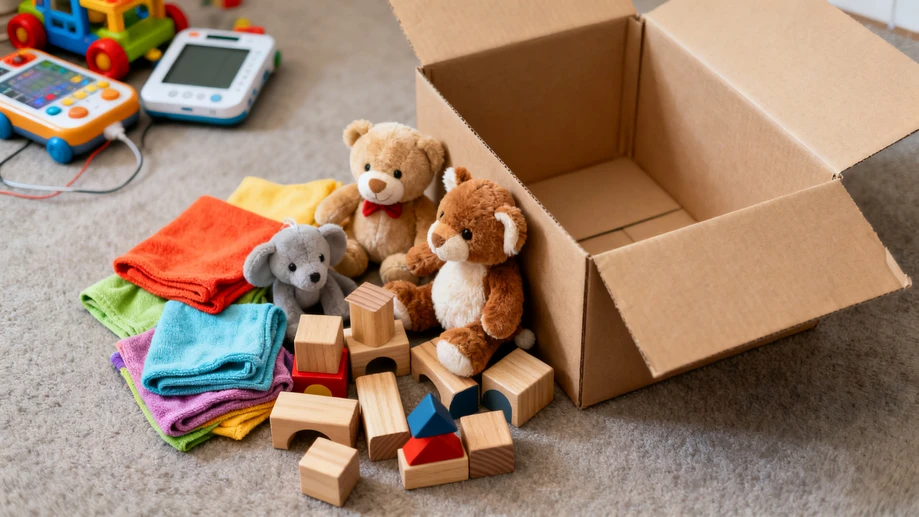
Consider the humble wooden block – a rectangular miracle worker. Stacked vertically, it becomes a skyscraper; laid horizontally, a racetrack. Combine several, and suddenly you've built an entire city with traffic patterns and zoning laws dictated by a four-year-old's imagination. No instructions needed. No software updates required. This open-ended quality activates different neural pathways than guided play. Neurological research suggests that self-directed play with simple objects strengthens executive function skills like planning, focus, and impulse control far more effectively than many app-based alternatives.
Then there's the cardboard box phenomenon. Give a child an expensive playset, and they might enjoy it. Give them the shipping box it came in, and you've created a universe. Suddenly that cardboard container transforms into a spaceship control panel, a dinosaur cave, or a gourmet kitchen for mud-pie baking. This transformation magic occurs because the box imposes no limitations. It becomes whatever the child needs it to be in that moment. The same principle applies to sticks that become magic wands, blankets that become fortress walls, and sofa cushions that become mountain ranges. These "loose part" playthings possess infinite adaptability.
Sensory engagement differs dramatically too. Plastic light-up toys often engage only sight and sound, while simpler materials offer textural richness. Running fingers through a bin of dried beans, molding cool clay, or smelling the earthiness of wooden toys creates multisensory connections. Occupational therapists particularly value tactile materials like sand and water for developing fine motor skills. The resistance of dough as little hands knead it builds strength more effectively than swiping a screen. Natural materials also introduce subtle variations – the unique grain of wood, the cool smoothness of stones – teaching children to appreciate nuance in a world of mass-produced uniformity.
Social dynamics shift noticeably with simpler toys. Electronic gadgets often encourage isolated play, while basic toys become relationship builders. A pile of blocks invites collaboration in castle construction. A dollhouse becomes a stage for complex social negotiation between playmates. Even the classic board game creates face-to-face interaction where children read expressions, practice patience, and navigate winning and losing gracefully. As child psychologist Dr. Amanda Richards observes, "Shared laughter over a collapsing block tower does more for emotional bonding than any multiplayer online game could."
The longevity factor deserves mention. While electronic toys become obsolete as technology advances, timeless toys grow with the child. A set of wooden animals serves different purposes at different ages – teething relief for infants, imaginative play props for toddlers, and storytelling elements for emerging readers. Quality wooden toys often become heirlooms, passed between siblings and generations. Their durability makes both ecological and economic sense, reducing waste and avoiding the frustration of broken plastic components destined for landfill after minimal use.
Finding balance proves key rather than embracing an all-or-nothing approach. Many families designate tech-free zones or establish "analog hours" where simple toys take center stage. Rotating toy selections keeps play fresh without constant consumption. The most successful approaches honor a child's natural curiosity. A magnifying glass for bug inspection creates more authentic science learning than any programmed quiz. A basket of scarves for dress-up sparks more creative storytelling than pre-scripted character toys. Perhaps the wisest approach comes from veteran parents who advise: "Provide the materials, then get out of the way. The magic happens when adults stop directing and children start discovering." That unscripted magic, it turns out, builds the most essential skills of all.