
Use Ice Cubes To Lift Dried Gum And Wax Off Floors Without Scratching Surfaces
This zero-cost household trick works for every floor finish and saves you hours of scrubbing stubborn sticky messes.
People who regularly host small gatherings at home know how easy it is for random sticky messes to end up stuck on otherwise spotless floors. A stray piece of chewed gum tracked in on a shoe sole, a drip of melted candle wax that dripped off a coffee table candle, or even a blob of melted candy left by a visiting kid can turn into a frustrating headache once it hardens and adheres tight to the floor surface. Most people’s first instinct is to grab a hard metal scraper or a heavy-duty chemical cleaning solution, only to end up with faint scratch marks across the top coat of their hardwood, or a weird faded discoloration spot that never goes away no matter how much they scrub. Many common store-bought stain removers also leave behind a faint oily residue that attracts extra dust for weeks after cleaning, making the same spot look dirtier than it did before the treatment.
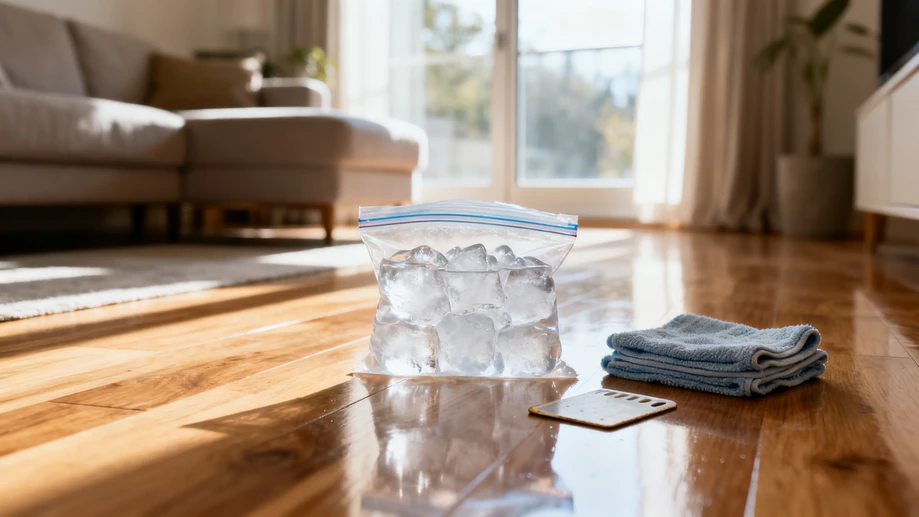
The trick works with nothing more than a handful of regular ice cubes pulled straight from the kitchen freezer, no special purchases required. Place the ice cubes inside a sealed plastic food storage bag to create a small, even cold pack, then set it directly on top of the dried sticky spot for three to four full minutes. Do not place bare ice directly on the floor, as the melting water can seep into tiny gaps on unfinished wood or even leave faint water rings on polished laminate surfaces that are hard to remove later. The low temperature will make the elastic gum and soft wax lose all of their adhesive properties, turning hard and brittle instead of stretchy and gooey, so it will not stretch and spread further across the floor when you start working on it.
Once the sticky material is fully chilled and hardened, grab an old, expired plastic gift card or membership card with a smooth, flat edge to scrape at the surface gently. No extra pressure is needed at all, the brittle mess will flake off in large, complete pieces the second the edge of the card makes contact, even for tiny bits of gunk that are wedged between floor planks. Unlike sharp metal scrapers that can easily dig into soft vinyl, bamboo, or luxury wood floor finishes, the soft rigid plastic of the old card will never leave a single scratch on the floor surface, no matter how much you work across the spot. You do not need to put in extra effort or use any sharp tools that pose safety risks for people walking through the space.
After all of the bulk of the sticky mess is lifted, take a soft microfiber cloth dampened with a tiny amount of mild diluted dish soap, wipe across the area once to pick up any leftover faint residue that might still be clinging to the surface. Follow up immediately with a dry, clean microfiber cloth to soak up any leftover moisture on the floor, and the entire spot will be completely gone, with zero trace left behind. The whole process usually takes no more than five minutes from start to finish, and it works on every type of floor from polished ceramic tile to soft cork flooring, no special adjustments needed. There is no strong chemical smell left hanging in the air after the work is done, and no harsh fumes that can irritate people with sensitive respiratory systems.
Thousands of home cleaners have tried this trick and shared that they no longer panic the second they spot a stray sticky mark on their floors, since they know they do not have to waste time testing multiple expensive specialized cleaning products or risk damaging their carefully maintained floor finish. It works even on old, set-in gum stains that have been stuck on the floor for weeks, without requiring repeated rounds of scrubbing that waste time and energy. Unlike many viral cleaning hacks that call for mixing multiple random pantry ingredients that may react badly with certain floor finishes, this simple ice method carries almost zero risk of accidental damage, making it accessible for every household no matter what type of flooring they have installed.