
Arrange Deep Kitchen Drawers With Stackable Non Slip Dividers To Cut Daily Search Time
This low effort, budget friendly home organization trick turns often ignored messy deep kitchen drawers into highly efficient storage spaces that save tons of time during daily cooking routines.
Most households have at least one extra deep kitchen drawer that turns into a hidden mess zone over time. These drawers are usually built to hold larger utensils and bulk small items, but the lack of proper separation means every time someone pulls the drawer open to grab a can opener, they end up knocking over a stack of measuring cups, tangling a set of silicone spatulas, and digging around under a pile of random gadgets for three full minutes before finding the exact item they need. Many people give up on these drawers entirely, choosing to stack all their most used small tools on counter tops instead, which eats up valuable prep space and makes the whole kitchen look cluttered even right after a deep cleaning. No amount of surface wiping can fix the underlying disorganization hidden behind the drawer front, and most people assume they need to buy a whole new custom cabinet setup to resolve the issue completely.
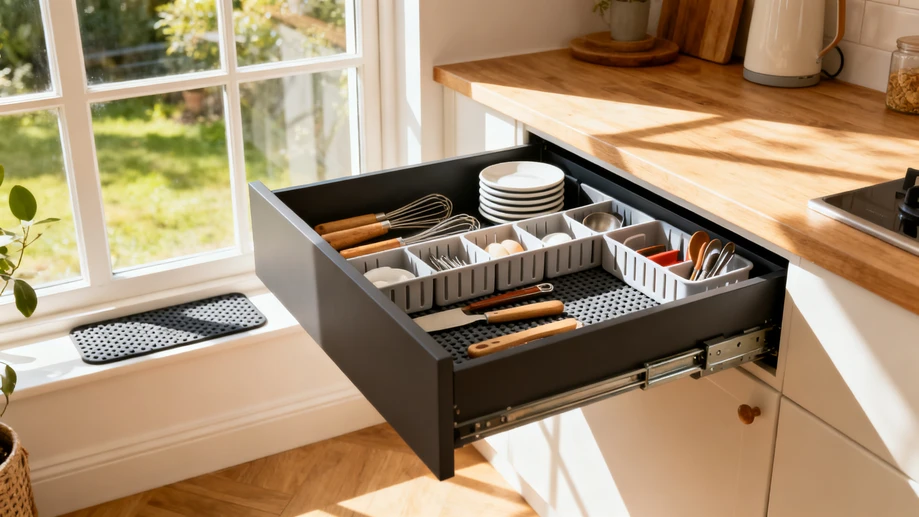
The trick works with almost no modifications to the existing drawer structure, no drilling, no permanent adhesives, and no expensive custom cut parts required. The first step is to empty the entire drawer completely, sorting all the items into three separate piles: daily use tools that get pulled out multiple times a week, occasional use items that only come out for weekend baking or holiday meal prep, and unused items that have not been touched for more than six months. After discarding or donating the unused pile, place a thin non-slip rubber liner across the entire bottom of the empty drawer, so nothing can slide around even if someone yanks the drawer open at full speed. Lay the stackable non-slip dividers across the liner, adjusting the gaps between each divider to fit the size of common items instead of using uniform equal sized slots, so every odd shaped tool gets a spot that fits its unique shape.
Put the most frequently used items in the front section of the drawer, stored vertically instead of stacked flat. This means a set of wooden spoons can stand up in one narrow slot, a full set of measuring spoons and cups can stand upright in another, and small sharp tools like peelers and vegetable chompers have their own dedicated spot where they will never get buried under heavier items. The occasional use items go in the far back section of the drawer, and the upper half of the deep drawer’s extra vertical space can be filled with small stackable containers that hold spice packets, plastic wrap rolls, and leftover baking ties, so no extra space goes to waste. Leave one small completely unsegmented empty slot near the very front for random odds and ends that do not fit any predefined category, so no random new item will end up tossed into the back of the drawer to create a new mess that requires a full re-sort later on.
People who test this small adjustment report that their average time spent hunting for kitchen tools during meal prep drops by 12 to 18 minutes every single day, which adds up to more than an hour of extra free time each week. Unlike other organization hacks that fall apart after two weeks of regular use, this setup stays fully functional for months, because the non-slip liner and dividers keep everything in place even with heavy daily use. It also eliminates the common frustration of having to pull out a dozen other items just to reach one thing stuck at the very back of a deep drawer, making the whole cooking process feel far more calm and efficient. Many users even extend this setup to deep drawers in dining rooms and home offices later, reaping the same space saving benefits across every part of the living space without any extra unnecessary spending.