
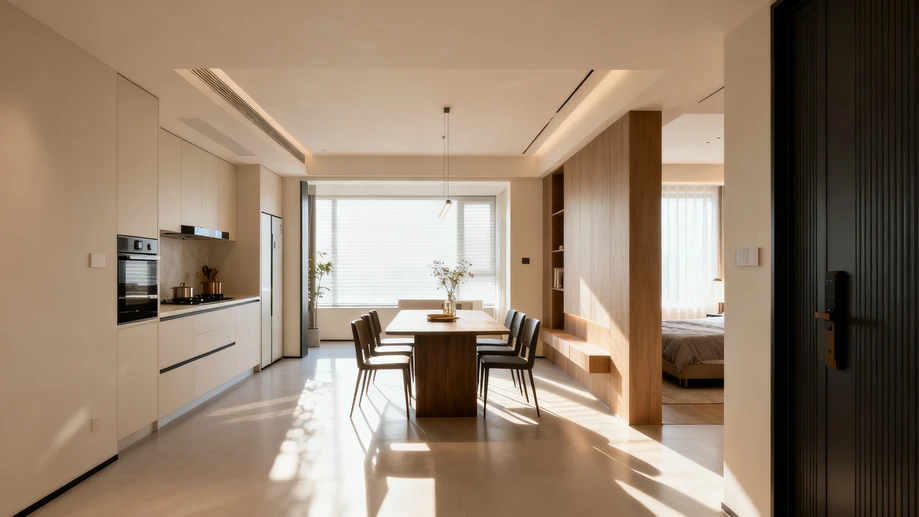
Skip The Preset Room Labels For A Home That Feels 10 Times More Effortless
Minor adjustments to whole-home circulation flow eliminate thousands of unnecessary daily steps and make regular household routines far less frustrating for all residents.
Most people start their home renovation journey by copying standardized layout rules they see on design feeds, zoning spaces strictly by pre-set function labels that never align with their real daily habits. The living area has to have a full wall mounted TV unit no matter if no one in the household watches broadcast television, the dining space is only for placing a dining table no consideration is given to where people usually drop their takeout bags after work, and people end up wandering three different corners of the house just to grab a cold glass of water from the fridge. People carry heavy grocery bags from the front door all the way across the living room to reach the kitchen counter, trip over slippers left scattered along the corridor, and do not even realize these tiny inefficient routes are adding up to extra thousands of steps they never needed to walk every single day.
The core of smooth home layout and line design never revolves around fancy decorative trends, it focuses on stringing all high-frequency daily actions into a continuous unobstructed path that requires zero extra effort. A flat countertop for placing keys, wallets and incoming parcels can sit within three steps of the entry door, attached directly to a small side surface for temporary placement of fresh groceries, so people no longer have to stagger across half the house while balancing heavy shopping bags. The cooking sequence from pulling ingredients out of the refrigerator, rinsing them at the sink, to placing them on the stove forms a straight unbroken line, no more twisting around bulky kitchen islands or stepping over piles of cleaning supplies left on the floor. Many residents also adjust the laundry zone opening to connect directly to the side of the bedroom hallway, so freshly washed pajamas and bedding can be hung directly inside wardrobes two steps away, no one has to carry damp heavy laundry through the main living area and interrupt other family members who are resting on the couch.
A lot of hidden unnoticeable circulation lines get overlooked during initial layout planning, and these are usually the parts that cause the most frustration long after people move in. The path between the master bedroom and the bathroom, for example, should never have sharp protruding table corners, half-open cabinet doors, or thick raised rugs that create unexpected height differences. People can walk to the bathroom safely in a half-asleep state at midnight without knocking their toes or tripping over obstacles, and no bright overhead lights need to be turned on to disorient groggy half-sleeping eyes. For days when guests come over to gather, the social path from entry door to dining space to outdoor balcony recreational area stays completely separate from the private working zones for cooking and laundry. Visitors can move around freely without accidentally stepping into someone doing the dishes, and no one has to stop their own household tasks to squeeze aside and make space for other people passing by.
Many residents assume adjusting whole home flow requires expensive wall demolition and full renovation overhauls, but most of the highest impact tweaks cost almost no money and take no more than a weekend to complete. Shifting the sofa to face a different direction opens up a shortcut between the entry door and the kitchen that was previously blocked, moving the large storage cabinet previously locked in the utility room to the gap between the kitchen and entry eliminates the need to walk all the way to the far end of the house to grab a snack, and hanging commonly used cleaning tools on the blank wall near the balcony door cuts the path to mop the floor in half. Residents who make these small shifts report total daily household chore time drops from 40 minutes to 20 minutes, and that extra recovered spare time gets added directly to the hours they can spend resting and doing hobbies they enjoy.
The best whole home layout never looks identical to the uniform show home templates circulated on social media, it is custom built to match all the tiny specific small habits of everyone who lives inside the space. There is no need to force residents to change their natural daily movements just to fit a superficial decorative aesthetic that looks good in photos. All the small tiny efforts people save every single day add up over time, creating a far more relaxed low-friction living environment where no one ever feels unnecessarily frustrated by their own home.