
Stop Washing Your Cutting Board Wrong
Why water alone won't protect you from kitchen bacteria
You rinse it under the tap after chopping onions, give it a quick scrub when chicken juice pools in the grooves, and call it clean. If your cutting board routine ends there, you're hosting a microscopic dinner party for pathogens every night. That slick surface might look spotless, but water alone is about as effective at sanitizing as a feather duster against a hurricane. Bacteria like salmonella and E. coli burrow into knife scars—those tiny canyons your blade carved during last Tuesday's salsa prep—creating biofilm fortresses no splash can penetrate. The warm, damp environment of a freshly rinsed board? It's basically a five-star resort for germs plotting their next invasion of your salad.
What makes this oversight so dangerously common is the illusion of cleanliness. We see visible debris wash away and assume the job's done, but invisible threats multiply exponentially in those hidden crevices. A study revealed that cutting boards can harbor 200 times more fecal bacteria than a toilet seat if improperly cleaned—a statistic that should make anyone pause mid-salad toss. The porous nature of wood absorbs juices like a sponge, while plastic boards develop microfissures over time that trap particles. Neither material offers immunity when subjected to casual rinses. And if you're using the same board for raw meat and veggies without proper sanitation? You're practically charting a map for cross-contamination straight to your digestive system.
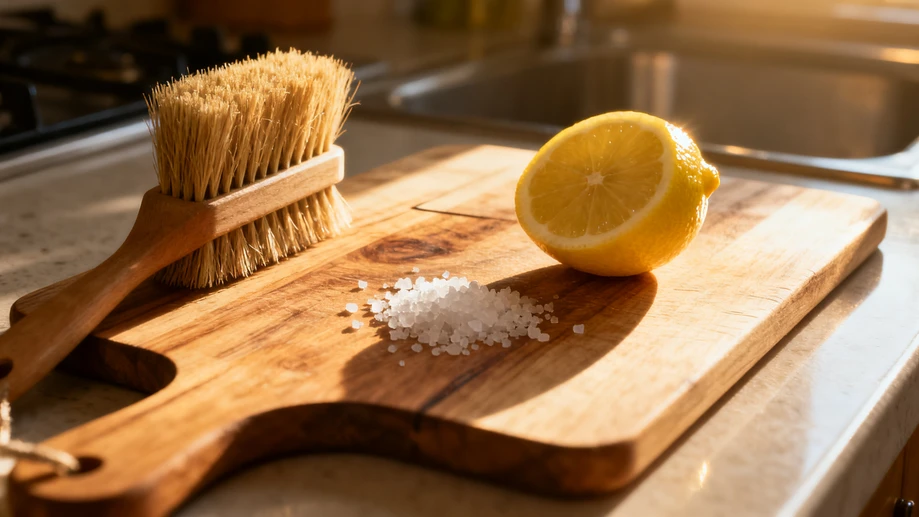
Revolutionizing your board care starts with two humble warriors: coarse salt and half a lemon. After scraping off food bits, sprinkle salt like winter frost across the surface, then take the lemon half and scrub like you're erasing a mistake. The salt acts as abrasive grit to lift grime from grooves, while citric acid dissolves organic residue and neutralizes odors. Rinse under hot water afterward, and suddenly that innocent kitchen staple becomes hostile territory for microbes. For extra germ warfare, occasionally pour boiling water over the board (avoid this for thin plastic boards prone to warping). The heat shock treatment annihilates pathogens at a cellular level, something your lukewarm tap water could never achieve.
Maintenance frequency matters more than you think. That "once a week" deep clean? Too little, too late. Sanitize after preparing any high-risk items: raw poultry, seafood, or eggs. Even seemingly harmless veggies like lettuce carry risks—recall the sprout-related outbreaks that made headlines. For wood boards, monthly conditioning prevents drying and cracking; food-grade mineral oil works wonders without turning rancid. Store boards upright in a drying rack rather than stacking them damp. That trapped moisture accelerates bacterial growth faster than leftovers forgotten in a summer car.
The material you choose dictates your defense strategy. Wood has natural antimicrobial properties—its tannins actively fight bacteria—but requires more meticulous drying. Plastic boasts dishwasher safety, yet becomes a scarred battleground after months of knife work, demanding replacement before it turns into a petri dish. Bamboo offers middle-ground durability but check for formaldehyde-free adhesives. Glass or stone boards might seem hygienic with their non-porous surfaces, but they'll murder your knife's edge in three chops flat. Regardless of type, consider color-coding: red for meat, green for produce, blue for fish. This visual system prevents a pork-chopping board from later dicing your strawberries.
Ultimately, treating your cutting board right isn't about extra chores; it's reclaiming peace of mind. That moment when you bite into a fresh apple slice without wondering if it carries last night's chicken remnants? Priceless. Proper care extends your board's lifespan too—no more warped plastics or split woods after six months. Embrace the salt-lemon ritual like a kitchen meditation. As steam rises from your freshly sanitized board, you'll taste the difference in every meal. Because food shouldn't be a gamble, and your health deserves more than a halfhearted rinse.