
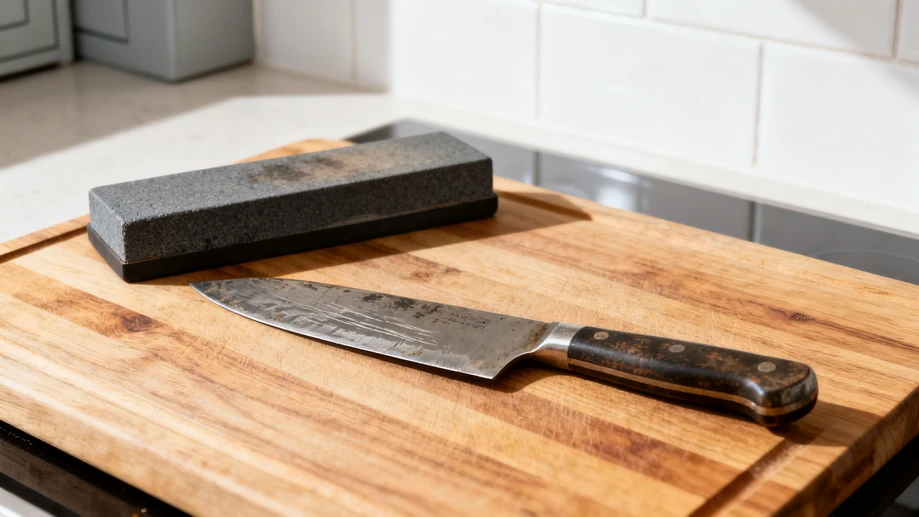
The Mystery of Your Dull Kitchen Knives Solved
Ever wondered why your blades lose their edge so fast? The answer isn't just about slicing.
We've all been there. You reach for your trusty chef's knife, ready to tackle some onions or tomatoes, only to find it slides rather than slices, crushing the delicate flesh. Frustration mounts as what should be a quick prep job turns into a messy, inefficient chore. "I just sharpened this!" you might exclaim, blaming perhaps the steel quality or your own sharpening skills. But hold that thought. The real culprit behind prematurely dull knives might be lurking in your everyday habits, and it's less obvious than you think.
Contrary to popular belief, knives don't dull primarily from cutting soft foods like tomatoes or herbs. The steel in a reasonably good knife is significantly harder than those items. The true enemy is often hidden in plain sight: your cutting surface. Imagine this: every time your blade comes down onto a hard glass cutting board, a ceramic plate (yes, people do this!), granite countertop (accidents happen), or even a very hard bamboo board, microscopic portions of the knife's incredibly fine edge are literally being chipped away or bent over. It’s a process called metal fatigue on a tiny scale, where the hard impact overwhelms the thin edge. Think of it like repeatedly bending a paperclip back and forth – eventually, it weakens and breaks.
But the drama doesn’t end at the board. How you wash and store your knives plays a starring role in this tragedy. Tossing your sharp blades haphazardly into a sink drawer filled with other utensils is practically inviting them to bang against each other. Every clang, every scrape against a metal spoon or the sink basin is another assault on that delicate edge. Similarly, jostling them together in a crowded knife block or leaving them loose in a drawer ensures they’ll constantly be rubbing and impacting their edges against each other or the wood. It’s slow-motion destruction, one tiny nick at a time.
So, what’s a home chef to do? Defending your knife’s edge requires a conscious strategy. First and foremost, embrace the humble wooden cutting board – specifically end-grain wood like maple or walnut. These surfaces have a gentler, slightly yielding quality that cradles the blade rather than fighting it, significantly reducing impact shock. Avoid glass, stone, or overly hard bamboo like the plague. Second, create a sanctuary for your blades. Magnetic knife strips mounted on the wall are fantastic – they keep knives visible, easily accessible, and crucially, isolated, preventing any contact. Alternatively, dedicated blade guards or individual slots in a knife block (not too tight!) work well. If you must use a drawer, invest in individual in-drawer knife sheaths or organizers. Finally, treat them with respect at bath time. Hand wash your knives immediately after use. Do not, under any circumstances, toss them into a dishwasher. The harsh detergents and the violent tumbling action inside the machine are disastrous for edges and can even damage handles over time. Wash gently by hand, dry thoroughly to prevent rust, and place them safely in their designated spot.
The sharpness of your knife isn't just about convenience; it fundamentally alters your cooking experience. A truly sharp knife glides through food with minimal effort, preserving the integrity of ingredients (think cleanly sliced tomato slices instead of mush). It grants you control, reduces the risk of slippage and injury (dull knives require more force, leading to accidents), and frankly, makes cooking more enjoyable and efficient. It’s the difference between seeing prep work as a joyless slog and an empowering part of the creative process. By understanding the silent enemies – the wrong cutting surface, improper storage, and neglectful cleaning – you hold the key to maintaining a sharp, reliable blade. Treat your knives not just as tools, but as valuable partners in your culinary adventures. Give them the care they deserve, and they’ll reward you with years of precise, effortless performance, turning every slice, dice, and chop into a moment of quiet kitchen satisfaction.