
The Secret Life of Dish Soap Bubbles Is Way More Interesting Than You Think
Unlocking the surprising science and hidden magic in your kitchen sink.
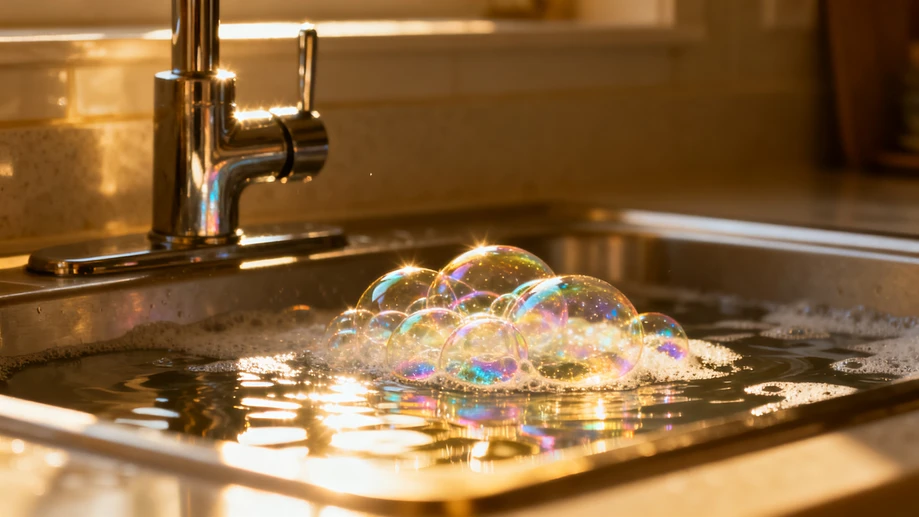
We all know the drill. You squeeze a dollop of that familiar liquid into the sink, add some water, and suddenly, your greasy dishes are under siege by a frothy army of bubbles. It’s mundane, routine, almost invisible in its everydayness. But have you ever stopped mid-scrub, sponge in hand, and truly *looked* at those bubbles? That iridescent shimmer? The way they cling together, forming ephemeral structures? There's a whole universe of fascinating physics and chemistry playing out right there in your suds.
Let's start with the star of the show: surface tension. Plain water molecules are incredibly clingy to each other, like a crowd holding hands tightly. This strong attraction creates a sort of "skin" on the water's surface, making it hard for bubbles to form and last. Water alone just can’t sustain that bubbly structure we need for cleaning. Enter the humble dish soap molecule. It’s a clever little thing with a split personality: one end is hydrophilic (water-loving), the other is hydrophobic (water-hating but grease-loving). When you add soap, these molecules rush to the water's surface, their hydrophobic tails sticking out, effectively breaking that tight grip of the surface tension. This weakening is the crucial first step in bubble formation.
Now, here’s where it gets visually magical. When you agitate the soapy water – swishing your sponge, running the tap – you trap air inside these layers of soap molecules. The hydrophobic tails point inwards towards the air pocket, while the hydrophilic heads point outwards towards the water. This creates a super thin, incredibly stable sandwich: air inside, soap molecules forming the walls. But why the rainbows? That mesmerizing play of colours isn't pigment; it's pure physics! Light waves hitting the ultra-thin soap film interfere with each other. Some wavelengths get cancelled out, others get amplified, depending on the exact thickness of the film. As water drains downwards within the bubble wall (thanks, gravity!), the thickness changes constantly, creating those shifting, shimmering hues. You’re literally seeing light waves dancing on a molecular film.
But the bubble's job isn't just to look pretty; it’s a critical cleaning agent. Those hydrophobic tails are desperate to escape the water. When they encounter grease or oil on your plate (which is also hydrophobic), it’s a match made in cleaning heaven! The soap molecules surround the grease droplet, tails buried happily in the grease, heads facing outwards into the water. This forms a structure called a micelle. The grease is now trapped inside this ball, suspended in the water, ready to be rinsed away. The bubbles themselves, and the foam they create, act like a physical net. They lift the loosened grease and food particles away from the dish surface and hold them suspended in the water column, preventing them from redepositing. More bubbles generally mean more active soap molecules are available to trap grease, which is why we instinctively associate lots of suds with effective cleaning.
Think your tap water is just... water? Think again. Its mineral content plays a surprisingly dramatic role in your bubble bath (for dishes, that is!). Hard water, packed with minerals like calcium and magnesium, is a notorious bubble killer. These minerals interfere with the soap molecules' ability to do their job effectively. They react with the soap to form scum (that annoying bathtub ring is a close cousin), which uses up the soap before it can form many good bubbles and reduces its cleaning power. Soft water, with fewer minerals, allows the soap molecules to work freely, creating richer, more stable foam and leading to more efficient cleaning. If you’ve ever noticed your bubbles disappearing quickly or leaving a film, hard water might be the sneaky culprit.
So, the next time you’re facing a sink full of dirty dishes, take a moment. Look beyond the chore. See the delicate, rainbow-streaked domes clinging to your glass. Appreciate the intricate molecular ballet that allows a simple liquid to conquer stubborn grease. Those fleeting bubbles are a testament to brilliant chemistry and beautiful physics, working silently every single day in kitchens worldwide. They’re not just cleaning agents; they’re miniature marvels, fleeting works of natural art born from the mundane. Who knew the most captivating science show could be happening right in your own sink?