
Open Ended Toys Are the Secret to Unlocking Your Child's Imagination
Discover how simple toys without instructions can lead to the most complex and creative play
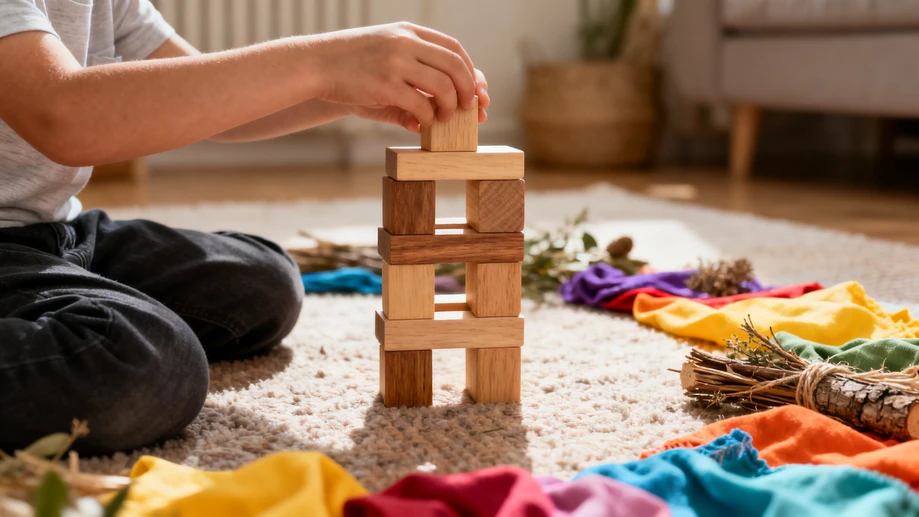
Picture this: your living room floor scattered with wooden blocks, colorful scarves, and random cardboard tubes. While it looks like chaos to adult eyes, this is actually a carefully constructed pirate ship sailing through stormy seas, according to the four-year-old captain in charge. The magic ingredient? These aren't fancy electronic gadgets with flashing lights and pre-programmed responses. They're open-ended toys – the unsung heroes of childhood play that are having a major moment among parents and educators.
Unlike their single-purpose counterparts, open-ended toys have no defined rules or predetermined outcomes. Think building blocks that become towers, bridges, or abstract sculptures depending on the day. Consider play silks transforming from superhero capes to desert oasis tents before lunchtime. Even simple items like wooden spoons and mixing bowls can moonlight as drum kits or spaceship controls. The beauty lies in their blank-slate nature – they're essentially imagination delivery devices waiting for a child's brain to activate them.
What makes these toys so powerful is how they wire young brains for creative problem-solving. When a child encounters a traditional puzzle, there's only one "right" solution. But hand them a set of magnetic tiles? Watch as they engineer increasingly complex structures, learning through trial and error why some shapes create stability while others cause collapse. This process builds neural pathways for critical thinking that structured activities simply can't match. Each failed attempt becomes a physics lesson, and every successful creation builds confidence.
Interestingly, the benefits extend far beyond solo play. When multiple children engage with open-ended materials, something remarkable happens. That pile of loose parts becomes the foundation for collaborative storytelling. One child starts building a zoo, another suggests adding a dinosaur exhibit, and suddenly they're negotiating animal habitats and ticket prices. This organic interaction teaches communication, compromise, and shared narrative-building – skills that serve them better than any forced sharing exercise ever could.
Perhaps the most compelling argument for open-ended toys comes from observing attention spans. In an age of digital distractions, these simple materials demonstrate an almost magical ability to captivate. A child might spend forty minutes deeply focused on balancing river stones or arranging wooden discs by size and texture. This sustained concentration develops naturally because the activity is driven by internal curiosity rather than external entertainment. The reward comes from the process itself, not some flashing "win" signal.
For parents feeling overwhelmed by toy aisles, embracing open-ended play is surprisingly liberating. Start by rotating toys to keep things fresh – a basket of pinecones and fabric scraps one week, a tub of kinetic sand and molds the next. Observe what captures your child's interest and build from there. Most importantly, resist the urge to "fix" their creations or suggest "proper" uses. That oddly shaped clay blob? It's actually a highly advanced cookie-making machine for imaginary dragons, obviously.
The true test comes when you see your child ignore expensive electronic toys in favor of arranging sticks in the backyard. That's when you know their imagination has fully taken the wheel. These humble playthings become the training ground where future innovators, problem-solvers, and storytellers develop their superpowers. So next time you see a living room transformed into an elaborate cardboard city, remember – you're not looking at a mess. You're witnessing the complex inner world of a child's mind made visible.