
Cloud Heights Hold Secrets to Tomorrow's Weather
Discover how the altitude of clouds can unlock predictions about rain, storms, and sunshine.
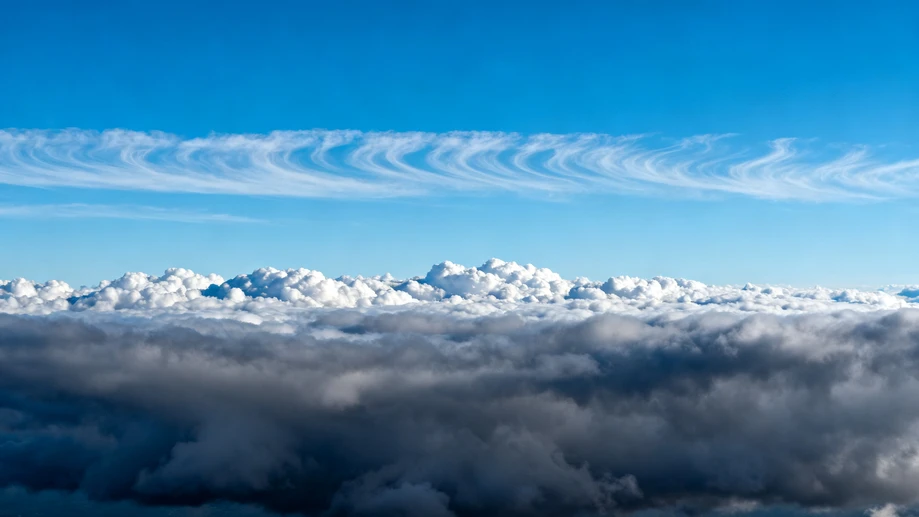
Look up right now. Those fluffy shapes drifting overhead aren't just sky decorations – they're live weather maps written in water vapor. Meteorologists have long known that cloud height is one of nature's most reliable forecast tools, far more accessible than any app. The atmosphere stacks its clouds in distinct layers, each whispering clues about what's coming next. High-altitude cirrus clouds, wispy and feathery, often arrive 24 hours before a warm front. Spot them painting brushstrokes across the blue, and you might want to reschedule that picnic.
While high clouds hint at distant changes, mid-level clouds act as the atmosphere's middle managers. Altocumulus clouds, those puffy sheep grazing in orderly rows, signal stability when they appear in the morning. But if they thicken and lower throughout the day? That's the sky's way of drafting a rain memo. These mid-level formations are particularly chatty about approaching disturbances, often preceding precipitation by 6-12 hours. Their texture tells the tale – smooth layers mean steady rain is likely, while lumpy, cotton-ball altocumulus suggests potential thunderstorms gathering energy.
Low clouds operate like the weather's ground crew, dealing with immediate conditions. When you wake to a thick, gray stratus blanket hugging the hills, expect a moody, drizzly day. These fog-like clouds form when moist air gets trapped near the surface, stubbornly refusing to budge. Conversely, those dramatic, cauliflower-shaped cumulus clouds bubbling upwards on summer afternoons are nature's popcorn machines. Watch their tops: flat tops mean they've hit a stable layer and likely won't grow further, but if they keep boiling upward into towering castles, grab an umbrella. Thunderstorms are probably cooking.
Understanding this vertical vocabulary transforms routine sky-gazing into a practical skill. Notice how storm clouds often wear multiple layers like a sandwich? A dark, low nimbostratus base dumping rain, topped by faster-moving middle clouds, with wispy cirrus streamers racing ahead – that's a classic storm system profile. The speed difference between these layers reveals wind shear, hinting at potential severity. Even clear skies speak volumes. Exceptionally transparent, deep blue heavens often follow cold fronts, signaling dry, stable air settling in for a stretch of sunny days.
Modern technology hasn't replaced these ancient observations; it's made them more precise. Satellite loops show cloud height migrations across continents, while weather balloons directly measure atmospheric layers. Yet the fundamental principle remains beautifully low-tech: higher clouds predict further ahead, lower clouds report the here and now. By learning just five basic cloud types and their altitudes, anyone becomes a backyard forecaster. Tomorrow's weather isn't just on your phone screen – it's floating right above you, changing shape by the minute, free for anyone who bothers to look up and decode the message.