
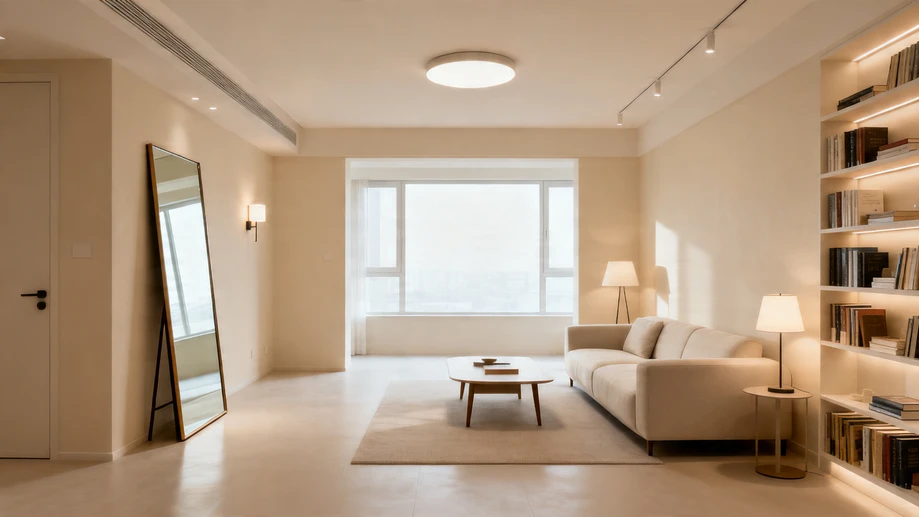
Five Clever Tricks That Make Your Small Room Feel Instantly Bigger
Unlock visual space without remodeling using these designer-approved optical illusions
Ever feel like your apartment walls are closing in? You're not alone. With urban living spaces shrinking globally, the magic of visual expansion has become interior design's hottest currency. The good news? You don't need demolition crews or lottery winnings to create breathing room. Clever spatial tricks can stretch your square footage before your eyes.
First, let's talk color alchemy. Painting walls and ceilings the same light tone creates seamless continuity that blurs boundaries. Soft off-whites, pale grays, or barely-there blues act like optical erasers for edges. But here's the twist: don't shy from dark accents. A single navy feature wall recedes visually, adding surprising depth when flanked by lighter surfaces. This chiaroscuro effect tricks the brain into perceiving expanded dimensions.
Now consider your vertical real estate. Floor-to-ceiling curtains hung inches below the molding draw eyes upward, exaggerating height. Match them to your wall color for maximum elongation. Similarly, bookshelves reaching the ceiling pull focus vertically rather than horizontally. Even your artwork placement matters - hanging pieces slightly higher than eye level creates an elevated sightline that makes ceilings appear loftier.
Mirrors remain the oldest trick in the book because they're physics in action. Position a large mirror opposite your window to bounce natural light around like a luminous pinball. But move beyond predictable placements. Try a mirrored backsplash in kitchens or closet doors with reflective surfaces. Even a collection of small vintage mirrors arranged gallery-style creates fragmented light play that visually fractures spatial boundaries.
Furniture strategy is where most small spaces stumble. The golden rule? Legs are your friends. Sofas and chairs with exposed bases create air pockets of visible floor space. Glass-top tables maintain sightlines while transparent acrylic chairs practically disappear. For multifunctional wins, consider ottomans with storage, fold-down desks, or nesting tables that vanish when not needed. Remember to leave breathing room between pieces - floating furniture away from walls creates valuable negative space.
Lighting layers complete the illusion. Overhead fixtures alone cast harsh shadows that box in rooms. Instead, deploy a trio of illumination: ambient (ceiling), task (floor lamps), and accent (sconces). LED strip lights under cabinets or along baseboards create ethereal glows that define edges without visual weight. The ultimate hack? Remove heavy lampshades to let bulbs cast unobstructed light circles that push back walls.
These transformations prove square footage is psychological as much as physical. Your perception crafts your reality. Implement just two of these techniques this weekend and watch your compact sanctuary unfold. After all, the most luxurious spaces aren't always the largest - they're the ones designed to feel that way.