
These Clever Design Tricks Can Make Your Tiny Home Feel Huge
Unlock the hidden potential of your compact living space with smart visual strategies.
Living in a small apartment used to feel like a constant game of Tetris, until I discovered how design illusions can reshape reality. The secret isn't about having less stuff—it's about tricking the eye into perceiving more space. Architects and interior designers have quietly used these visual hacks for decades, and the best part? They don't require knocking down walls or winning the lottery.
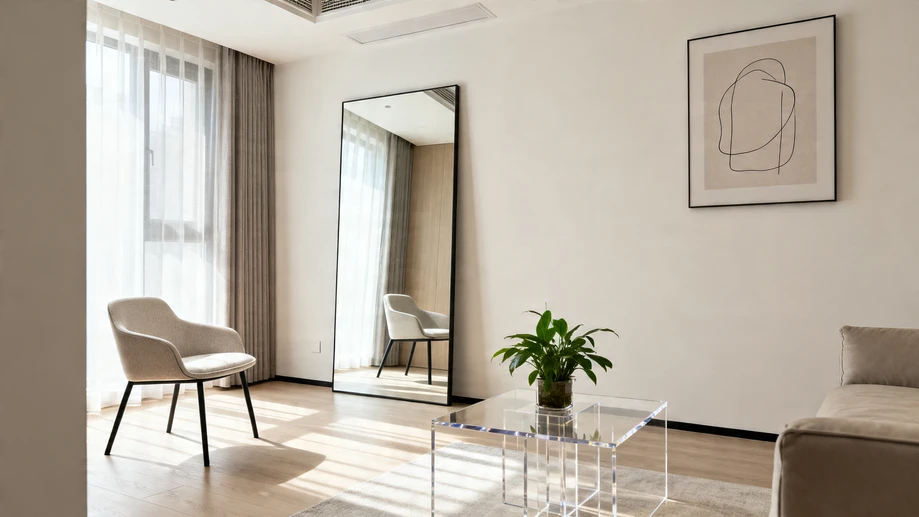
Let's start with the magic of reflection—no wands needed. Strategic mirror placement acts like a spatial double agent. When positioned opposite windows, they bounce natural light around like sunlight in a diamond mine, instantly vaporizing shadows that make rooms feel cramped. But here's the pro tip: go floor-to-ceiling. That vertical stretch pulls the ceiling height into your peripheral vision, creating an "upward expansion" illusion. Just avoid clustering small mirrors; they fragment the reflection like a broken camera lens.
Now consider the color conspiracy happening right under your nose. Light, cool-toned walls do more than just look fresh—they literally recede from your eyeballs. Painting ceilings a shade lighter than walls creates atmospheric perspective, that same trick Renaissance painters used to create depth in flat artworks. And forget accent walls in small spaces; they visually chop rooms into smaller segments like a butcher slicing meat.
Furniture selection becomes covert operations in compact zones. Leggy pieces with visible floor space beneath them create breathing room, while glass or acrylic tables disappear like well-trained ninjas. The real game-changer? Dual-purpose furniture with hidden storage. A storage ottoman swallows blankets while posing as seating, and nesting tables collapse like a spy's briefcase when not in use. Just remember the golden rule: furniture should never form a blockade around the room's perimeter.
Lighting deserves its own intelligence agency. Layered lighting—ambient, task, accent—eliminates gloomy corners that shrink spaces. But directional lighting steals the show: upward-facing floor lamps wash ceilings with light, making them appear to float higher. Meanwhile, discreet LED strips under cabinets create the illusion of floating furniture, adding valuable visual "airspace" between objects and floors.
Vertical real estate remains the most underutilized territory in small homes. Installing shelves near ceilings draws the eye upward, while floor-to-ceiling curtains—hung wider than the window frame—fake grand proportions. Even bookshelves can become secret weapons when organized by color; monochromatic arrangements look like intentional design features rather than clutter.
The final frontier? Strategic emptiness. Leaving some wall sections bare and maintaining clear pathways creates visual resting spots. Think of it like punctuation in a sentence—without spaces between words, everything becomes an overwhelming jumble. One perfectly placed piece of art beats a gallery wall every time in petite spaces.
These spatial illusions work because our brains interpret visual cues before processing square footage. By hacking these perceptions, even the tiniest studio apartment can feel like a loft. The revolution isn't about having more space—it's about convincing your senses you already do.