
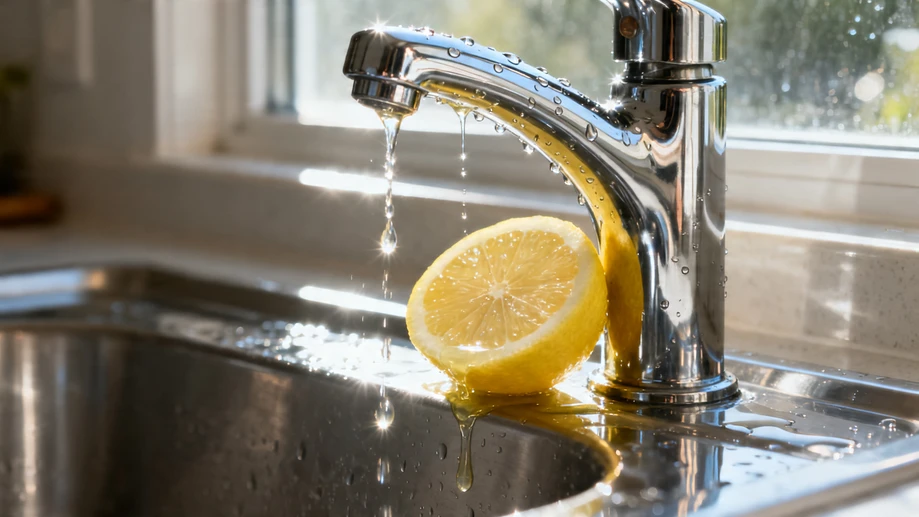
A Sparkling Faucet Is Only One Lemon Away
Unlock the citrus-powered secret to banishing stubborn hard water stains without harsh chemicals.
Ever notice those chalky white rings haunting your kitchen faucet? Hard water stains cling like uninvited guests, turning shiny fixtures into dull disappointments. While specialty cleaners promise miracles, your solution might be ripening on the countertop right now. That humble lemon holds acidic superpowers capable of dissolving mineral buildup where expensive products often fail. Its natural citric acid attacks calcium and lime deposits without toxic fumes or synthetic residues. Plus, that fresh citrus scent beats chemical odors any day.
Transforming lemons into cleaning allies requires minimal effort. Start by slicing one in half crosswise to expose maximum flesh. Rub the cut side vigorously over stained areas, squeezing gently to release juice. The gritty texture acts as a gentle scrub while the acid works its magic. For severe buildup, sprinkle coarse salt onto the lemon half for extra abrasion. Let the juice sit for 5-10 minutes as the citric acid breaks down minerals. Finally, wipe clean with a damp cloth and buff dry. You'll watch years of cloudiness vanish before your eyes, revealing the original shine beneath.
Beyond faucets, this technique revitalizes showerheads suffering from reduced water flow. Unscrew the fixture and soak it in a bowl of lemon juice overnight. By morning, mineral deposits dissolve away, restoring full pressure without scrubbing. Glass shower doors also surrender their soap scum when wiped with lemon halves. The acid cuts through grime while preventing streaks, outperforming blue-tinted cleaners. Even stainless steel sinks regain their luster after a lemon rub-down, neutralizing odors from last night's dinner prep simultaneously.
Why does this fruity trick work so well? Science reveals that citric acid's low pH dissolves alkaline mineral compounds through chelation. It binds to calcium and magnesium ions in hard water deposits, breaking their molecular grip on surfaces. Unlike vinegar's pungent aroma, lemon's volatile oils leave behind a refreshing scent. The acidity also kills bacteria naturally, making it doubly effective for food-prep areas. Best of all, lemons biodegrade completely, unlike plastic bottles of commercial cleaners destined for landfills.
Consider lemon power against conventional options. Store-bought descalers often contain hydrochloric or phosphoric acid that can damage finishes over time. Many leave chemical residues requiring thorough rinsing near food sources. Lemon juice requires no safety goggles or gloves, just cautious handling if you have cuts. It's significantly cheaper too—one lemon costs less than most specialty cleaners. For tougher jobs, boost your citrus with baking soda to create a fizzy paste that tackles oven grease or stained tile grout.
Embrace this kitchen staple as your eco-friendly cleaning partner. Keep lemons stocked not just for recipes, but as your first line of defense against water stains. Their versatility extends to polishing copper pots, disinfecting cutting boards, and even brightening laundry. Next time you see those ghostly faucet rings, remember nature's solution is probably sitting in your fruit bowl. Give it a try—your sink will thank you with a brilliant, chemical-free shine.