
Use Dried Loose Tea Packets To Cut Fridge Odor And Stop Leftover Flavor Mixing
This zero-cost simple hack delivers far better results than expensive store-bought deodorizer, and keeps all stored food tasting exactly as it should for weeks.
Almost every regular household runs into the same annoying fridge problem at one point or another. The moment the door swings open, a tangled mix of pungent garlic, leftover seafood stew, half-eaten melon and leftover takeout fumes hits the nose, and anyone who has pulled a box of fresh strawberries out to find they carry a distinct whiff of last night’s curry knows exactly how frustrating this can be. Most store-bought odor absorbing products lose their effectiveness after three to four days, and many of them leave a weird artificial chemical scent that sticks to bread and dairy products instead of getting rid of bad smells entirely. A lot of people end up wasting large amounts of plastic wrap just to seal every small food container completely, which adds extra unnecessary cost and extra trash for no real long term payoff.
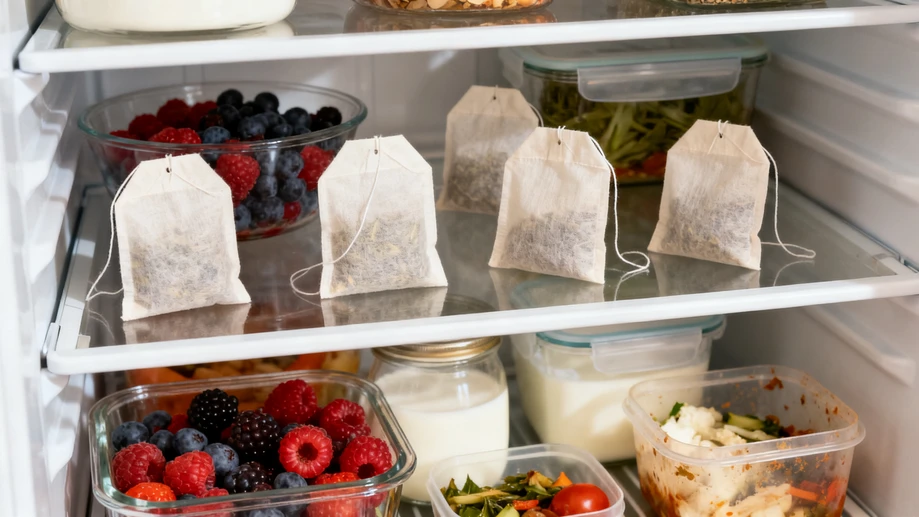
The hack requires no special tools or costly supplies, and makes full use of items that most households already keep stocked in the pantry. Used tea bags from daily brews work perfectly, as long as they are fully drained of excess liquid and laid out to dry on a clean counter for a few hours before use, and unused cheap loose tea wrapped in thin permeable paper also works just as well. Three to four small tea packs are all a standard full size fridge needs, placed on the far corner of the top shelf, the empty butter compartment on the door rack, a small gap next to the frozen vegetable bag in the freezer, and one more near the crisper drawer that holds raw onions and scallions. None of these packs take up valuable storage space for actual food, and they will not get in the way of regular fridge organization at all.
The small porous structure inside every dried tea leaf creates a far larger surface area for capturing stray odor molecules than plain baking soda, which most people use as a common fridge deodorizer. Unlike activated charcoal packs that require being taken out to sit in direct sunlight for several hours every two weeks to recharge their absorbing power, tea packs never need extra maintenance, and the subtle natural tea scent they release never transfers over to food the way powdery baking soda can if it accidentally spills. When a tea pack loses all its absorbing power after seven to ten days, the used tea leaves can be dumped straight onto houseplant soil as a gentle nutrient boost with zero unnecessary waste, so there is no extra trash generated at all from the whole process.
Few people know the trick has an extra powerful use for extreme odor situations. After storing a batch of heavily fermented kimchi, a strong aged cheese, or a large tray of marinated meat with heavy spice rub inside the fridge for a few hours, leave one slightly warm damp tea bag with its top open on the lowest shelf for half an hour, and every last trace of strong pungent fumes will be absorbed completely. No odd flavors will leak over to nearby cartons of milk, fresh berries or slices of cake, even if all of these items are placed right next to each other with only one thin layer of wrapping. This quick adjustment only takes a few seconds to set up, and eliminates the need to run a full fridge cleaning session just to get rid of lingering stubborn smells.
People who test this trick out for more than two weeks almost always report a huge noticeable difference in their daily fridge use. There is no more need to wrap every single small food container in three layers of plastic wrap to avoid flavor cross contamination, which cuts down on unnecessary single-use plastic waste for the whole household. The hack works for small dorm room mini fridges as well as large double door family sized units, and most users find it continues working reliably for months with only minimal two minute a week maintenance to swap out old tea packs for new dry ones. The total cost of running this deodorizing system works out to less than a dollar a month, making it far more cost effective than every commercial deodorizing product on the market.